

What it usually means
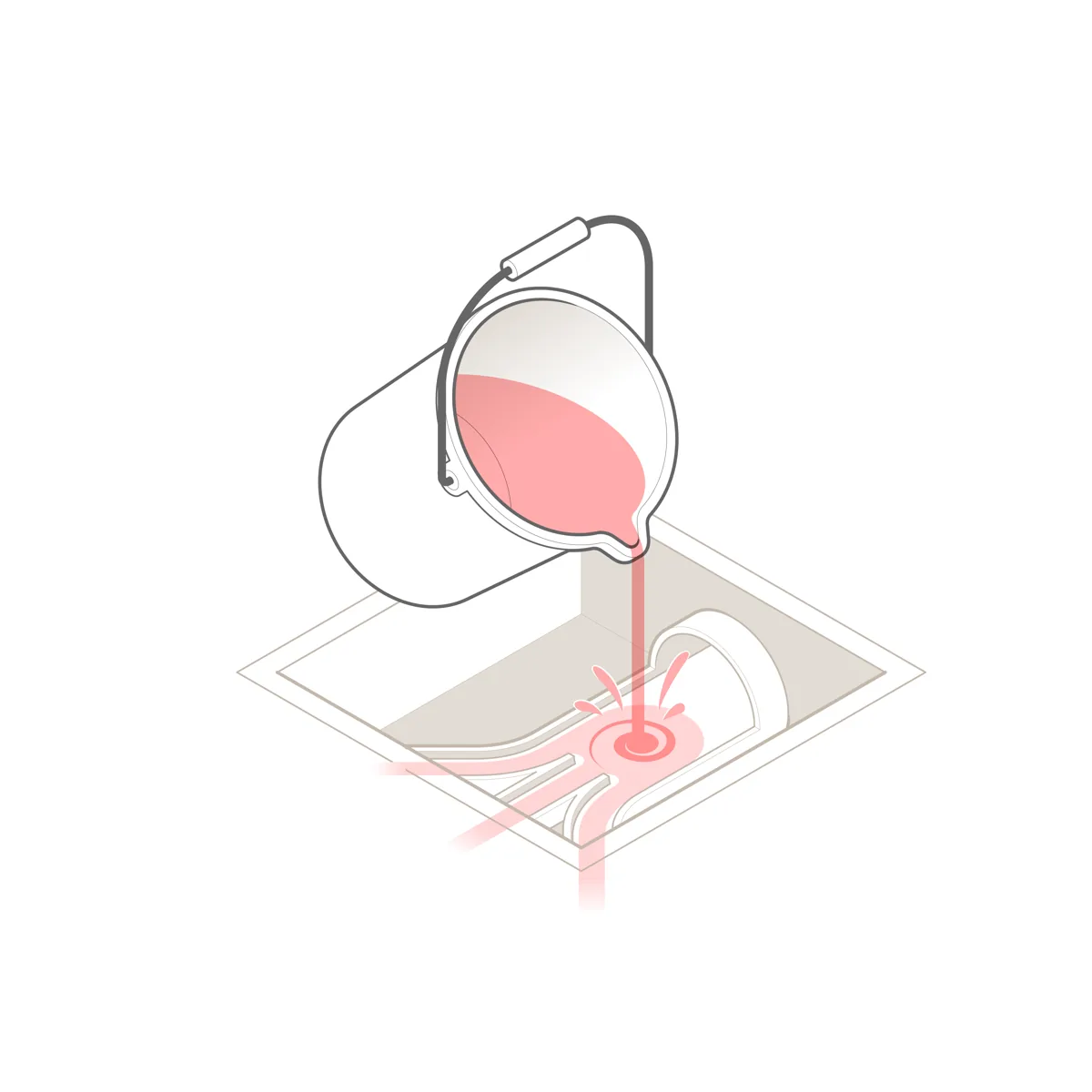
| A dry trap | By far the most common. A floor drain, spare shower or laundry sink that never gets used loses its water to evaporation. Pour in a litre of water and the smell is gone within the hour. |
|---|---|
| A failed toilet seal | The wax ring under the toilet has let go. Smell is strongest at the base, and the toilet may rock or have staining around it. |
| A trap being siphoned | A blocked vent or a partial blockage pulls the water out of a trap each time something drains. Usually comes with gurgling. |
| Build-up in the drain itself | Hair and soap film in a shower or sink drain can smell like sewer. The smell is right at the drain and goes when it is cleaned. |
| A cracked pipe or open cleanout | A split in a drain or vent pipe inside a wall, or a cleanout cap that was never put back. The smell does not go away and is strongest in one room. |
| A blocked main line | Sewage sitting in the pipe pushes gas back. Other drains will be slow as well. |
If the smell is rotten eggs near a gas appliance and you are not sure it is sewer, treat it as gas. Leave the house and call FortisBC's emergency line or 911 from outside.
What to check yourself
- Find every drain in the house, including the basement floor drain, laundry tub, and any shower nobody uses. Pour a litre of water into each.
- For a drain that keeps drying out, add a tablespoon of cooking oil after the water. It floats on top and slows evaporation.
- Kneel at the base of each toilet. If the smell is there, or the toilet moves when you push on it, the seal is suspect.
- Check that cleanout caps are in place. They are round caps with a square nut, in the basement floor or low on a wall.
- Clean the shower and sink drains: pull the hair out and scrub the stopper.
Call if
- The smell comes back within a day of filling the traps
- You can hear gurgling as well
- The smell is strongest in one wall or ceiling
- Drains are slow at the same time
Call 1-800-604-0631, any hour.
What fixing it costs
Finding a smell is investigation, so it is hourly: $289 for the first hour on site and $189 an hour after that. Many are found in the first hour. We may use dye or smoke to trace it. See dye testing.
If it turns out to be a blockage, clearing it is the usual flat price, from $329 for a fixture or from $649 for the main line. Resetting a toilet on a new seal is covered under toilet repair.
Questions people ask
Is sewer gas dangerous?
In the amounts that leak past a dry trap it is mostly unpleasant, but it should not be ignored. It can cause headaches and nausea, and a strong, constant smell means something is properly wrong.
Why does it smell worse when it rains or when the heating is on?
Wind and pressure changes push gas back up the pipes, and a furnace or bathroom fan pulling air out of the house draws it in through any trap that is not sealed.
The smell is outside, near the house. Is that the same thing?
Often it is the roof vent doing its job on a still day. If it is at ground level, look for a broken cleanout cap or wet ground over the sewer line.