

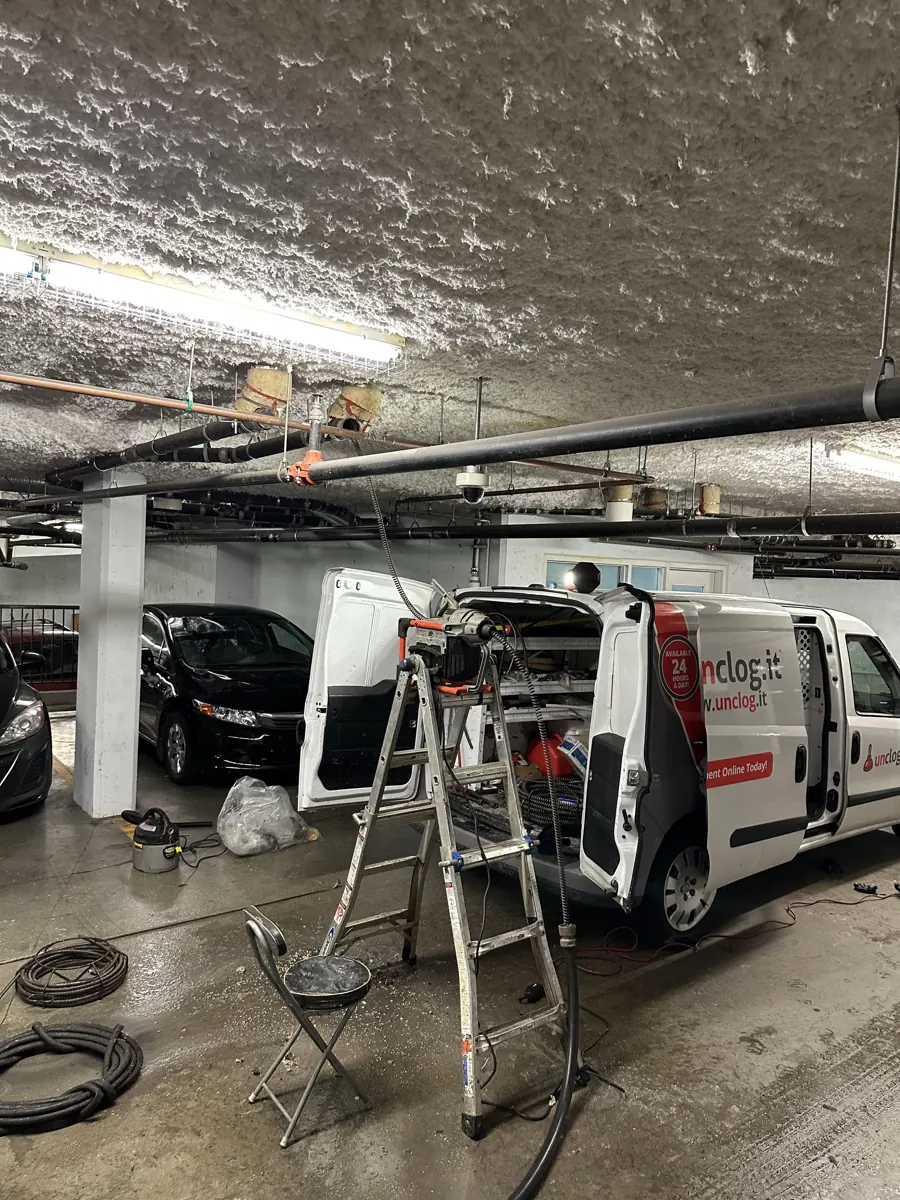
Whose pipe is it?
The question we are asked most. The short answer is that your strata's bylaws and strata plan decide, and you should read them or ask your property manager. The usual pattern in BC looks like this:
| Pipes that serve only one unit | The trap under your sink and the branch inside your unit, up to where it joins a shared pipe. Usually the owner's to maintain. |
|---|---|
| Pipes that serve more than one unit | Vertical stacks, horizontal mains in the parkade ceiling, the building sewer. Usually common property, and the strata corporation's to maintain. |
| A clog in your unit caused by the shared line | If water comes up in your sink when you have not used it, the blockage is downstream in a shared pipe. Call the property manager. |
| Damage to another unit | Who pays depends on the bylaws, the cause and the strata's insurance deductible. Report it to the strata at once and keep the plumber's written findings. |
When we attend, we write down where the blockage was and how far from the access point. That record is what settles whose pipe it was.
What we do in buildings
| Stack and horizontal drain cleaning | Scheduled cleaning of kitchen stacks and the horizontal lines they feed, with notice to residents. Stack cleaning · Horizontal drain cleaning |
|---|---|
| Hydro jetting | For grease in kitchen lines and scale in older cast iron. Hydro jetting |
| Camera inspection and locating | A recording and a written description for council, with distances. Camera inspection |
| Parkade and catch basin drains | Cleaning basins, trench drains and the lines they feed before the fall rains. |
| Sumps and pumps | Cleaning pits, testing floats and alarms, replacing pumps. Sump cleaning |
| Grease traps | For restaurants and commercial kitchens. Grease trap cleaning |
| Emergency response | Any hour. Emergency drain service |
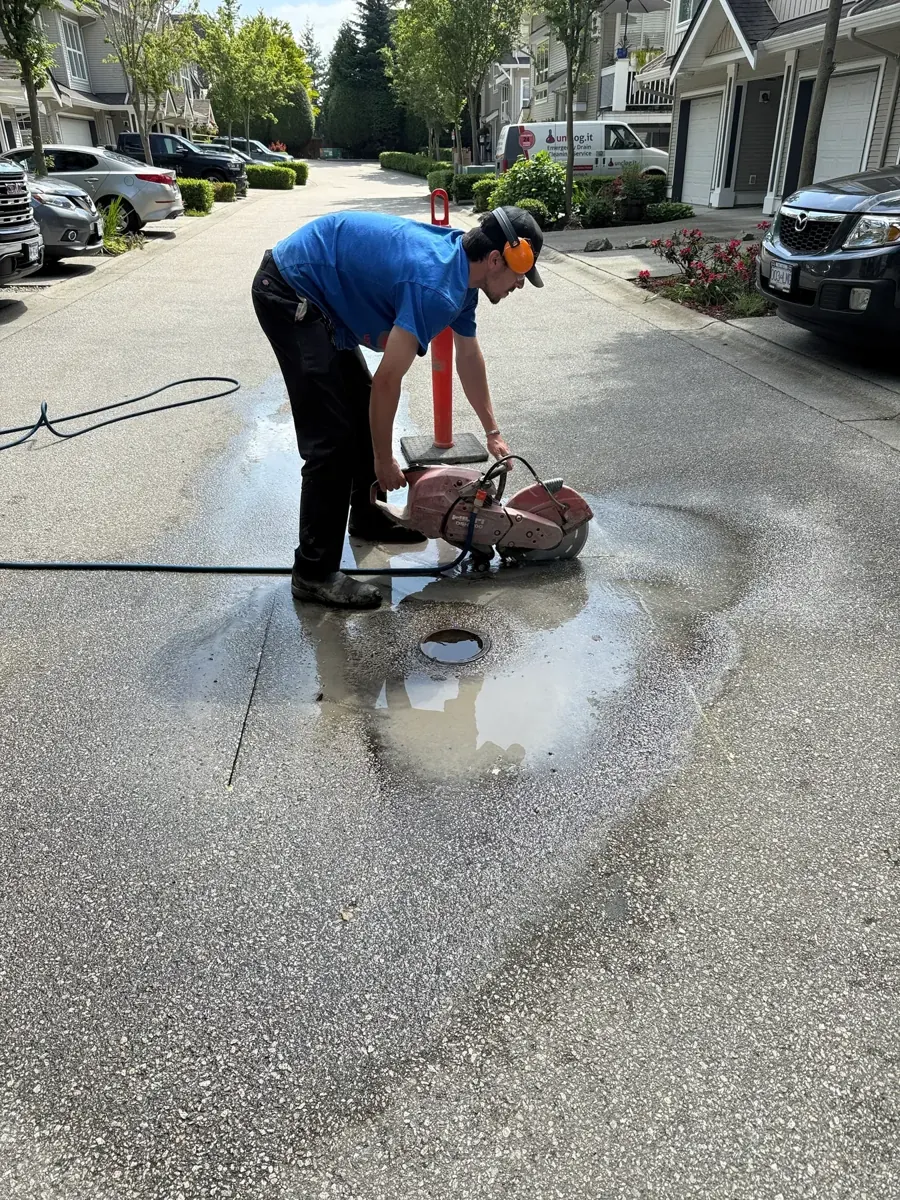
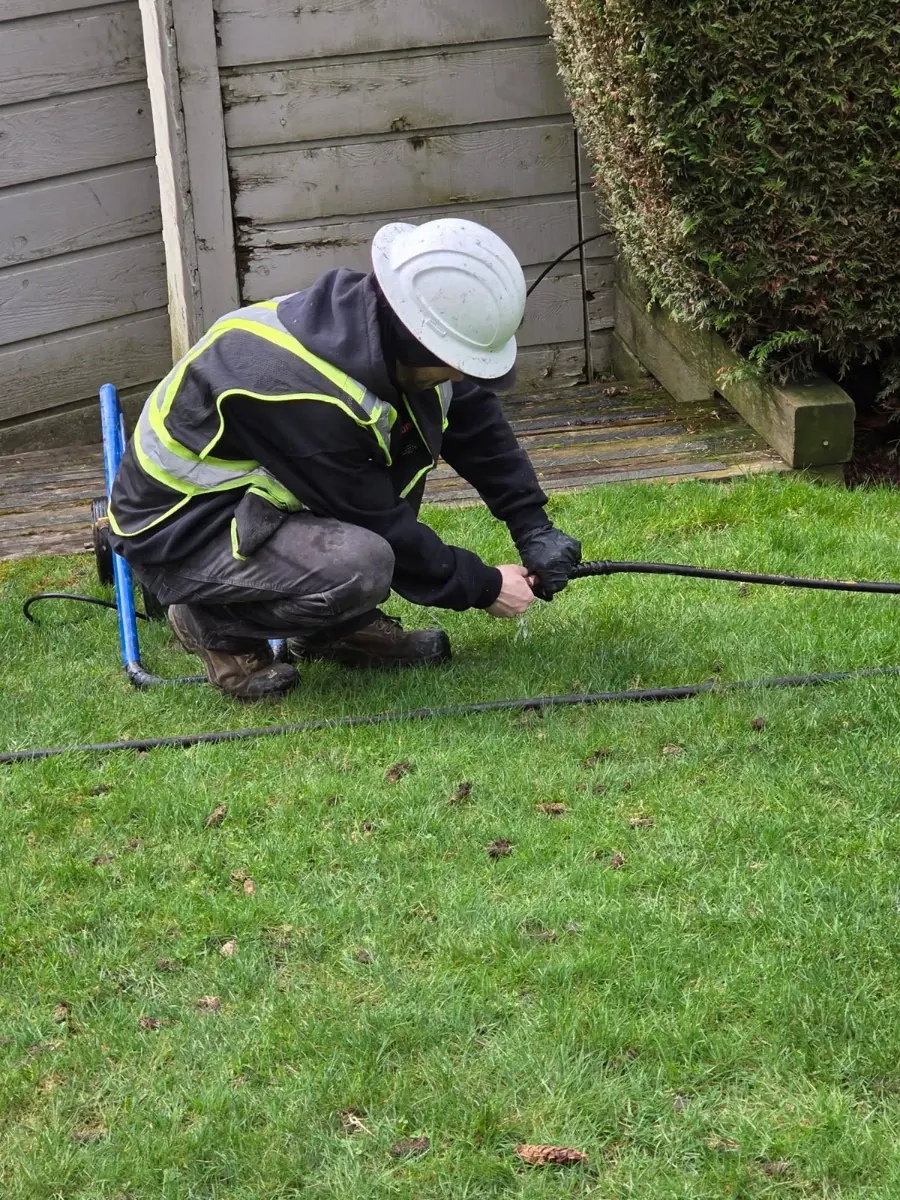
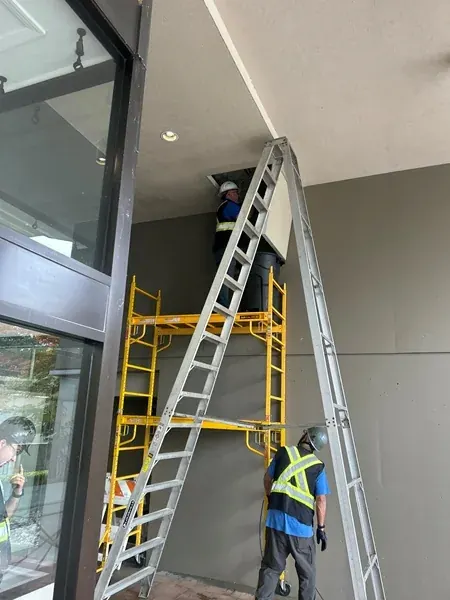
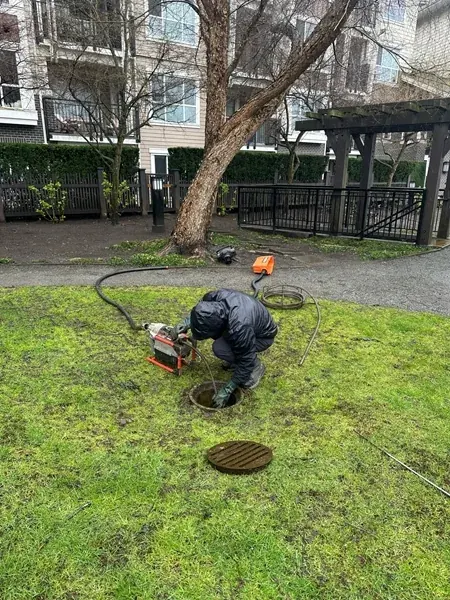
From the job file
These are real jobs, written up by Pure Mechanical Group with photos from site. Each link goes to the full field report on pureplumbing.com.
| Surrey strata | A kitchen sink backing up in one unit turned out to need the shared horizontal drain cleared. When a kitchen backup needs shared-drain access |
|---|---|
| Multi-unit kitchen line | From one fixture's symptom to clearing grease from the parkade cleanout and flushing the line. When a kitchen backup needs parkade cleanout access |
| Stack cleaning | Jetting and stack cleaning at a multi-unit property, with the access and staging planned first. Hydro jetting and stack cleaning |
| Burnaby catch basin | A backed-up catch basin that needed more than a cable. When a catch basin needs more than cabling |
| Vancouver commercial | An emergency drain call where the line had to be isolated and located before a repair could be planned. When an emergency drain needs isolation before repair |
| Sump pump | Baby wipes wrapped around a sump pump impeller at a strata building. Removing wipes from a blocked sump-pump impeller |
How pricing works for buildings
A single blocked fixture inside one unit is the same flat price a house pays: from $269 for a toilet and from $329 for a sink, tub or shower, in regular hours (9 to 5, Monday to Friday).
Shared lines, stacks, parkade drains and anything scheduled across a building are quoted in writing for that building, because access, length, the number of units and the notice you need to give all change the job. Hourly work is $289 for the first hour on site and $189 an hour after.
Property managers and councils can set up an account, purchase orders and scheduled maintenance directly with Pure Mechanical Group: see property management and strata on pureplumbing.com.
Questions people ask
I am an owner. Can I book you for my own unit?
Yes, for a clog inside your unit. If we find the blockage is in a shared pipe, we stop, tell you, and give you written findings to pass to your property manager.
Do you need access to other units?
For stack cleaning, usually yes: we work from cleanouts or from under kitchen sinks on the affected stack. We give the property manager the list and the notice wording.
How often should kitchen stacks be cleaned?
Many buildings do it every one to two years. Buildings with a history of grease backups, or with restaurants at ground level, need it more often. A camera after cleaning tells you what interval your building needs.
Do you provide a report for council or insurance?
Yes. You get what was done, where the blockage was, what came out and any camera footage.