

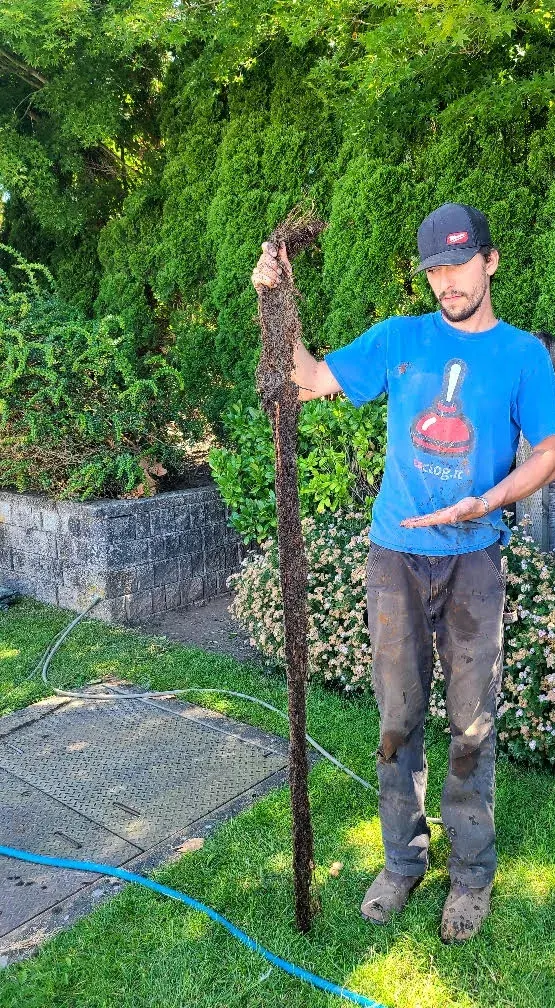
The signs
- The main line backs up, gets cleared, and backs up again six to eighteen months later
- Drains are slowest in spring and fall, when roots grow fastest
- The cable comes back with fine, hair-like roots on the cutter
- The house was built before the mid-1970s and still has its original sewer pipe
- There is a large tree, hedge or old stump between the house and the street
Older homes across Metro Vancouver and the Fraser Valley were connected with short lengths of clay or concrete pipe, and some with a tar-fibre pipe called no-corrode. Each joint is a place for a root to get in. Plastic pipe, common since the 1970s, has glued or gasketed joints and rarely has the problem.
Your options, cheapest first
| Cut the roots | A cable with a cutting head clears the pipe the same day. The roots grow back, because the joint is still open. Expect to repeat it. |
|---|---|
| Jet the line | Hydro jetting strips finer roots and the grease they hold. It lasts longer than cutting. It still does not close the joint. |
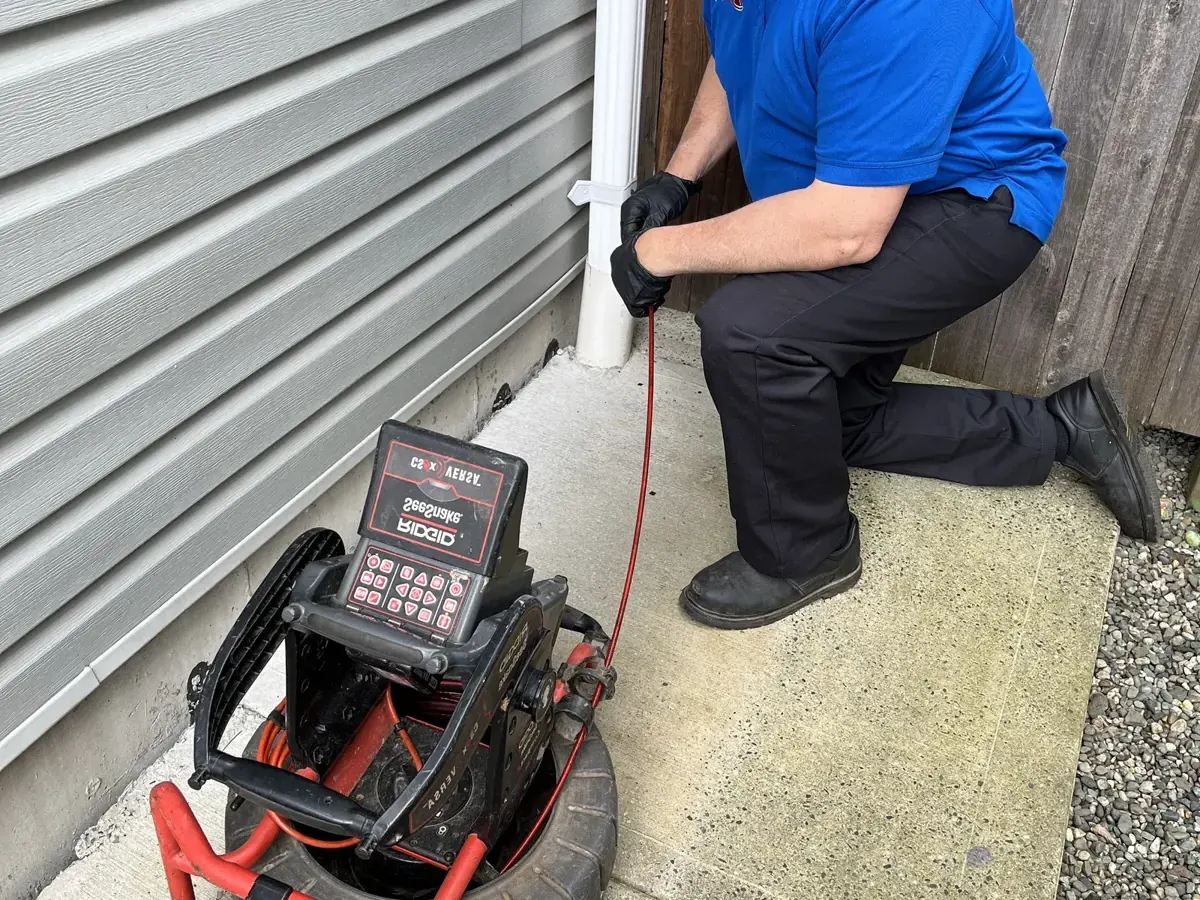
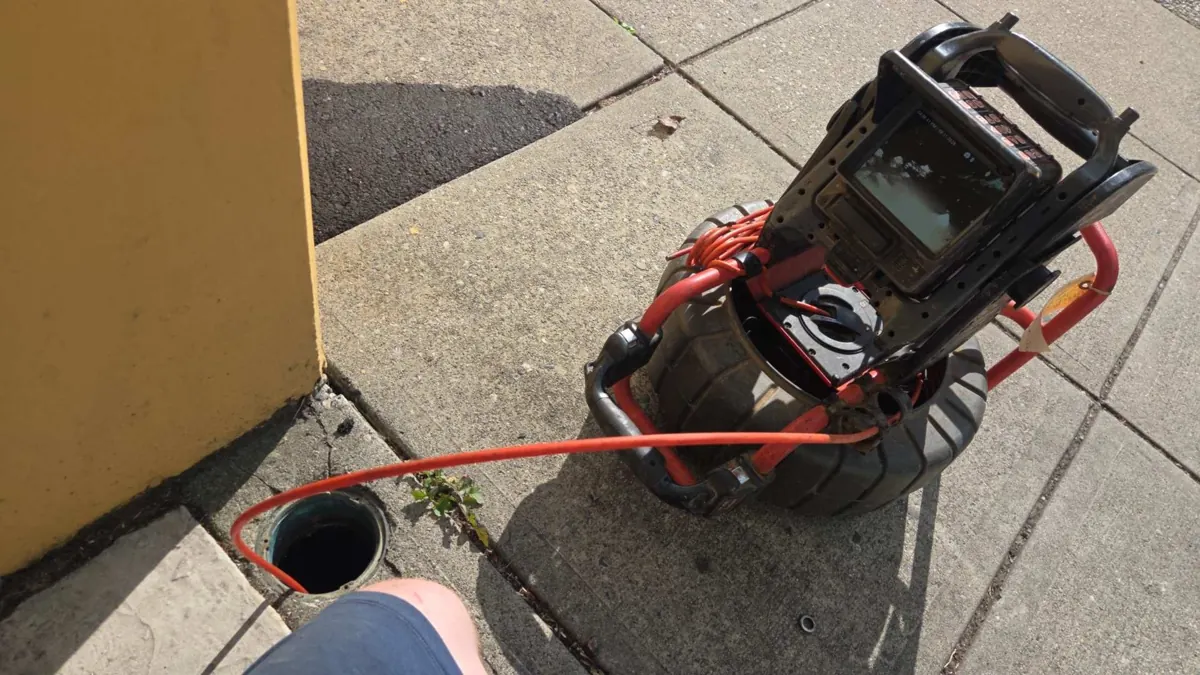
| Look at it | A camera inspection shows how many joints have roots, whether the pipe is cracked or sagging, and how far from the house each problem is. |
| Repair the bad section | If the camera shows one or two bad joints, digging and replacing that section fixes it for good. See sewer line repair. |
| Replace or line the pipe | If roots are in at every joint, the pipe is at the end of its life. See sewer line replacement. |
What it costs
Cutting roots out of a blocked main line is from $649 in regular hours (9 to 5, Monday to Friday), double outside them, for up to 2 hours on site. A camera inspection on the same visit is $249.
Repair and replacement are quoted in writing after we have seen the pipe on camera, because depth, length, what is on top of it and how the city wants it connected all change the number. The on-site estimate is $269 and comes off the price if you go ahead.
Pure Mechanical Group has written up two real jobs like this: a sewer camera that showed root intrusion behind a backup and turning that evidence into a targeted dig.
Questions people ask
Do root-killing products work?
Copper sulphate and foaming root killers can slow regrowth after a line has been cut. They do not clear a blockage, and they do not fix the joint. Check your municipality's rules before putting anything down the sewer.
Do I have to cut the tree down?
Usually not. Fix the pipe and the tree has nothing to chase. Cutting the tree down does not remove roots already in the pipe.
Who pays if the tree is the city's?
The pipe on your side of the property line is normally yours whatever the tree. Some municipalities have programs for root damage from boulevard trees. Check your city.
How often should I have it cut?
If you are not ready to repair, once a year before the fall rains is a reasonable routine for a line with known roots.